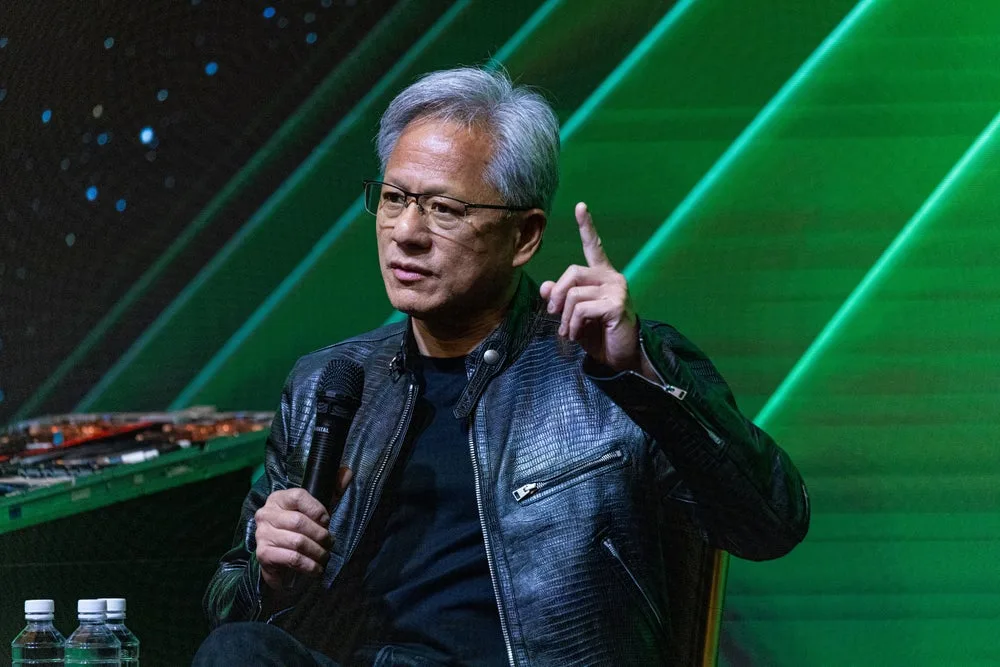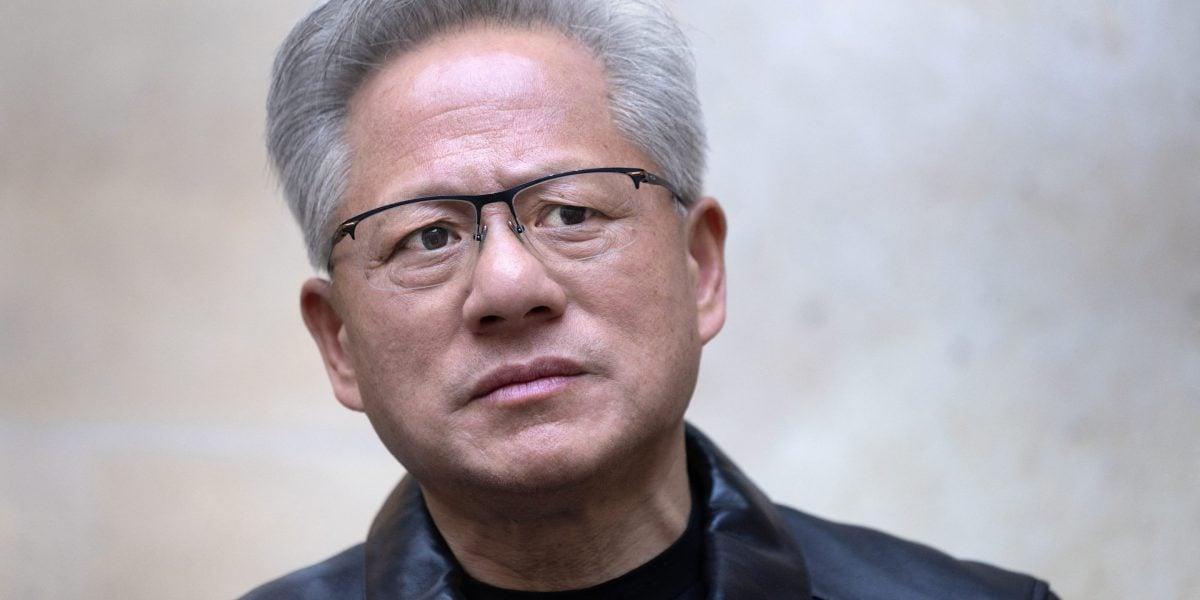
The news broke on Sunday, and by Monday Nvidia shareholders had made their verdict clear. The stock closed down 4.3%, wiping out roughly $230 billion in market value, after chief executive Jensen Huang admitted to an affair with a business executive suspected by U.S. intelligence of ties to China. The lurid details and national security questions dominated headlines, but beneath them sits a more structural concern: Nvidia is the ultimate key-man risk in the global AI economy.
Huang is not just the founder and public face of the world's most valuable semiconductor company. He is also the person most closely associated with the AI boom itself. Nvidia designs the graphics processing units that power the large language models, image generators, and scientific computing clusters that have come to define this technology cycle. The company controls more than 80 percent of the market for AI and data center GPUs, a dominance that makes every major AI player dependent on its supply.
The private market backbone
The scandal is not only a public markets story. Nvidia's influence runs through the private markets in ways that are easy to underestimate. Functionally every AI startup and large language model developer, including OpenAI, xAI, and Anthropic, relies on Nvidia GPU clusters to train and run models. That dependency means a leadership shock at Nvidia would send ripples through venture portfolios and late-stage funding rounds around the world.
Nvidia has also positioned itself as one of the most active strategic investors in the sector. It has backed Safe Superintelligence, the startup founded by former OpenAI researcher Ilya Sutskever, and robotics company Figure AI. It has invested in neocloud operator Nebius and supported both OpenAI and Anthropic directly. In September, Nvidia announced a $12.93 billion acquisition of open-source platform Hugging Face, a deal that touched venture backers such as Lux Capital and Salesforce.