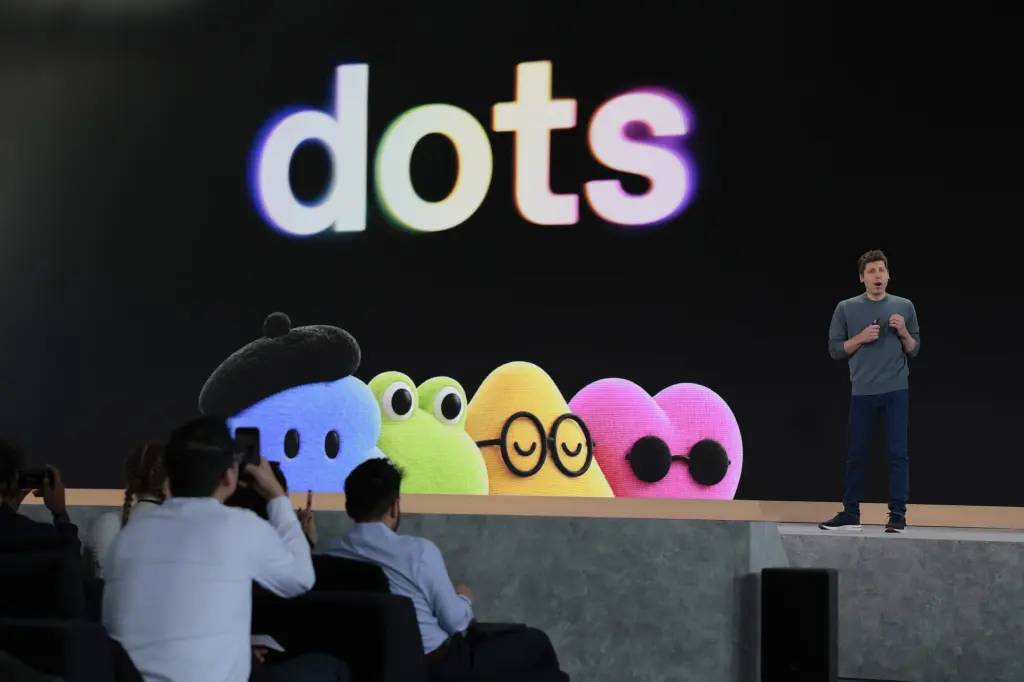
OpenAI's Dots, the agentic assistant the company unveiled about a month ago at a San Francisco developer event, is built around a different premise than most AI tools on the market: it doesn't wait to be asked. Rather than responding to prompts, Dots is designed to monitor a user's goals, inbox, and work tools and initiate tasks on its own. OpenAI showcased the product again at its London Dev Day, rolling it out first to enterprise customers and premium U.S. subscribers, the highest-spend tier of users, before any broader release. It isn't available in Europe yet, pending regulatory approval.
The consent problem nobody asked Dots about
Signal president Meredith Whittaker has been one of the sharpest critics of what proactive agents like Dots actually require to function. The core issue she raises is straightforward and hard to engineer around: making an assistant like this genuinely useful means giving it deep access to a user's communications, but the people on the other end of those communications, everyone who emails or messages a Dots user, never agreed to have an AI system ingest their messages. Whittaker has also flagged the specific risk to people in sensitive situations, warning that exposing contact information and communication metadata to an AI system this deeply could put vulnerable groups, including human rights activists, at real risk.
OpenAI's answer is narrower permissions, not a different architecture
OpenAI's public response to the privacy critique leans on gradual trust-building and granular user controls rather than rethinking the proactive model itself. Romain Huet, the company's head of developer experience, described setting his own boundaries with the product directly: he told his Dot to categorize his email constantly but never to send messages on his own behalf. That's a meaningful control for the user doing the configuring, but it does nothing to address Whittaker's underlying point, that the third parties whose messages get read never had any say in the matter at all.
The other problem: this is genuinely expensive to run
Privacy isn't the only constraint OpenAI is up against. Adam Fry, who leads ChatGPT's consumer business, has acknowledged that Dots sits on the compute-heavy side of OpenAI's product line, and the company isn't alone in facing that math. Elon Musk has said xAI's own Grok Bot carries costs that are unsustainably high relative to the revenue it generates, a rare admission from a major AI lab that the current generation of always-on, proactive agents may not be economically sustainable at today's usage patterns and pricing.