The most valuable player in this year's World Cup marketing might not be a thirty second spot or a stadium banner. It could be the humble ketchup sachet sitting next to your burger. As the 2026 tournament pulls in a projected ten billion dollars in global advertising and marketing spend, a growing number of brands have decided that the smartest place to tell their story is not on a screen at all. It is on the package.
This is a quiet but meaningful shift. For years, packaging was where a campaign ended, the last touch after the big television idea. Now it is increasingly where the campaign begins. The reason is simple. A limited edition pack does not vanish when the whistle blows. It lingers on kitchen counters, in office fridges, and across social feeds long after the match is forgotten, which makes it one of the few marketing assets that keeps working once the money stops.
Heinz turns a sachet into a talking point
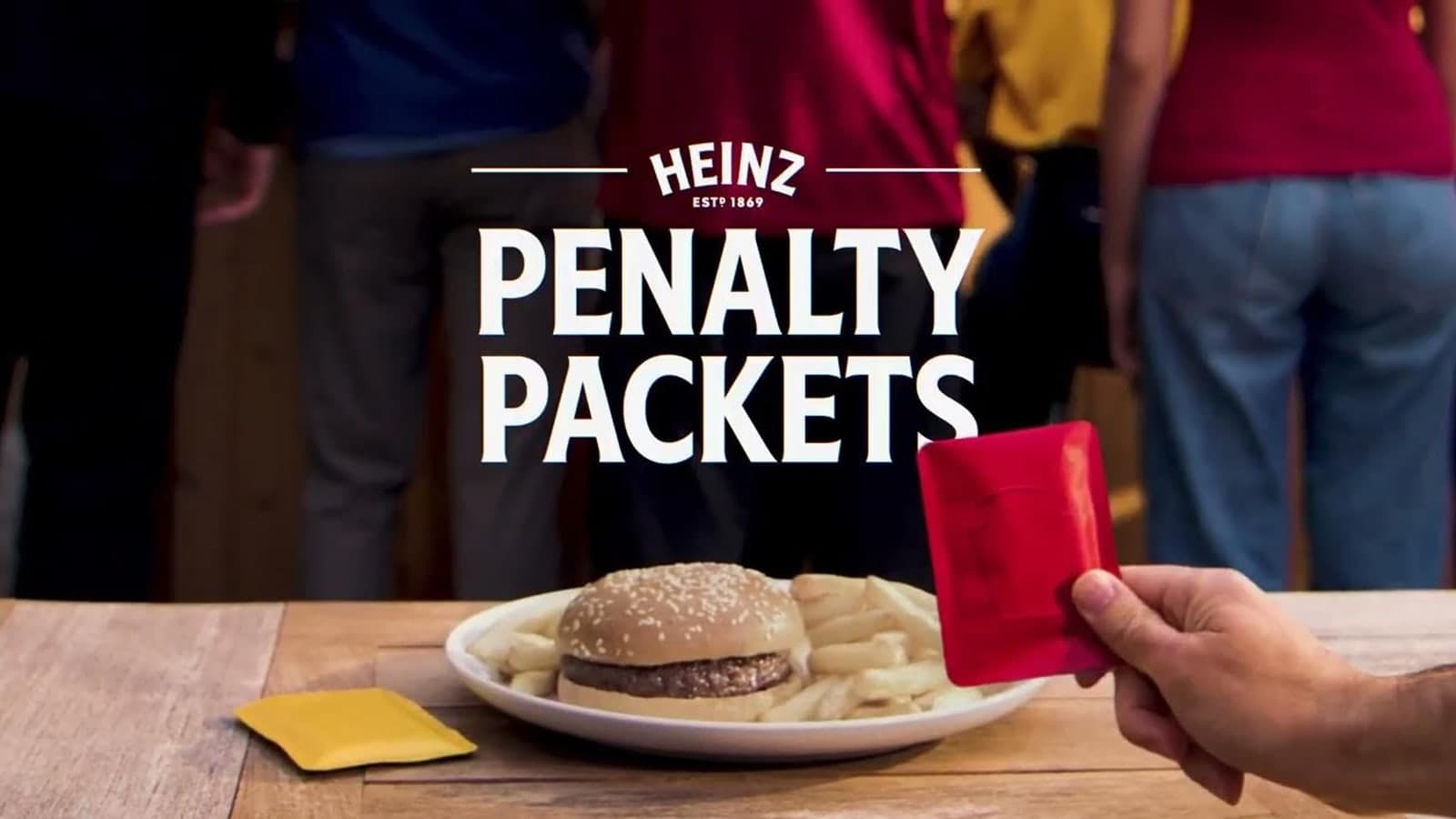
The clearest example of the trend is also the most charming. Heinz created what it calls Penalty Packets, ketchup and mustard sachets redesigned to look like football's red and yellow cards. Each one holds double the usual serving, a nod to the reality that no fan has ever been satisfied with a single sachet during a tense match. Sold through Walmart at a dollar and fifty seven cents a box, a wink at the brand's famous fifty seven varieties, the packs turn a throwaway item into something worth noticing and sharing.
There is a strategic edge hiding inside the joke. FIFA's strict rules keep commercial branding out of the stadiums themselves, so Heinz cleverly claimed the title of the tournament's unofficial stadium ketchup from the outside, reaching fans exactly where they eat and watch. It is a reminder that a good packaging idea can slip past the barriers that block conventional advertising.
The best World Cup packaging does not just carry the product. It carries the story, and it keeps telling it long after the final has been played.
Coca-Cola builds a collectible ecosystem
Coca-Cola took the idea further and turned its cans into a collecting hobby. Working with the creative agency GOLDEN, the brand produced country specific designs, diagonal stripes drawn from Argentina's jersey, green crosshatch patterns for Mexico, each one a small tribute to a national identity. A partnership with Panini tucked collectible football stickers beneath the bottle labels, borrowing the album culture that has defined World Cups for generations.
The company did not stop at the physical object. Its Matchday Hangout effort paired creator led watch parties with quick commerce platforms, so a fan could see a personality enjoying the drink and have it delivered in minutes. That link between a collectible pack and instant purchase is exactly the kind of loop that packaging alone could never close a few years ago.
QR codes, color changes, and forty years of history
Other brands are using packaging as a doorway to something bigger. Budweiser, marking forty years as a FIFA sponsor, released an eleven bottle anniversary collection, each bottle carrying a QR code that opens archival football content stretching back to Mexico in 1986. The pack becomes a portal into four decades of memories rather than a simple container.
PepsiCo leaned on spectacle and scale, rolling out tens of millions of football themed cans worldwide, including thermochromic editions that change color when the drink hits its ideal temperature. Its Lay's brand ran alongside with a familiar rallying cry built for the season, while Michelob Ultra tied its own football themed packaging to its soccer partnership. Different tactics, one shared belief, that the package is now a stage.
Why packaging earns its promotion
The logic behind the shift is sound. Media attention is more fragmented than ever, and a digital impression is gone in a scroll. A collectible can or a clever sachet, by contrast, sits in the physical world where people live, gets photographed, gets kept, and quietly advertises for weeks. It converts a fleeting moment of interest into a lasting presence, and it does so at a fraction of the cost of buying that same attention through paid media.
Packaging also travels into markets that have no obvious stake in the tournament. In places with little World Cup pedigree, a themed pack on a supermarket shelf or a quick commerce app folds the excitement of the event into ordinary shopping, letting a brand join the party without needing a national team in it.
The takeaway for marketers
What this World Cup makes plain is that packaging has been promoted from afterthought to anchor. The brands winning attention are the ones treating the pack as the foundation of the idea, then layering QR codes, loyalty hooks, collectibles, and delivery on top of it. The creative work now starts with a question that would have sounded strange a decade ago. What can the package itself do.
For marketers everywhere, the lesson reaches well beyond football. In a world drowning in disposable digital content, a physical object that people choose to keep is a rare and durable form of reach. The teams that understand this are not decorating their packaging for the tournament. They are building their campaigns on it, and the ketchup sachet may end up outperforming the commercial that cost a hundred times more.