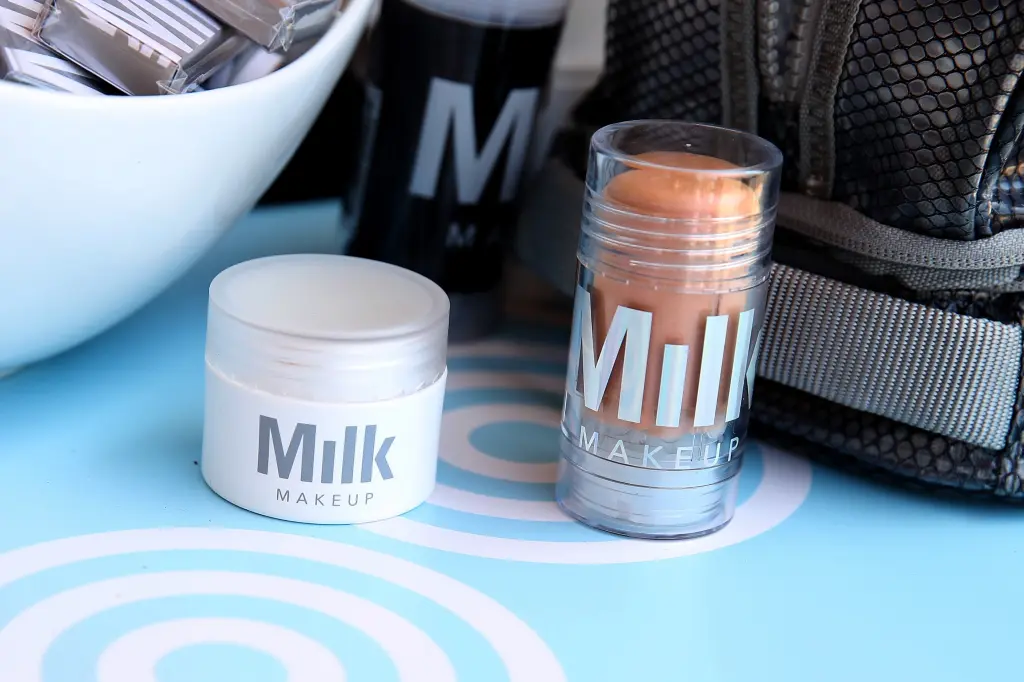
In early 2021, former L'Oreal executives Michel Brousset and Hind Sebti launched a SPAC called Waldencast on the idea that beauty's future belonged to a multibrand conglomerate. By November of that year, the pitch had become a 1.2 billion dollar merger combining Obagi Medical, a physician dispensed skincare brand, with the cult cosmetics label Milk Makeup. Four years later, the empire they built has come apart, and the people now trying to fix Milk Makeup are the same cofounders that deal once pushed to the side.
How the empire was built, and who actually ran it
Brousset, formerly president of L'Oreal's Consumer Products Division, and cofounder Hind Sebti launched Waldencast Acquisition Corp in early 2021. The SPAC's defining move was the 1.2 billion dollar merger announced that November, which closed in July 2022. Brousset and Sebti both eventually departed to run Obagi alongside private equity firm Bridgepoint, taking CFO Manuel Manfredi with them, while Felipe Dutra stepped in as Waldencast's principal executive and financial officer.
The numbers behind the collapse
Milk Makeup's net revenue fell 57.1 percent to 26.1 million dollars in the first half of 2026, down from 60.9 million dollars a year earlier. Adjusted EBITDA swung from a 9.7 million dollar profit to a 14.8 million dollar loss. Waldencast took a 52.3 million dollar goodwill impairment charge on Milk alone, and the brand's implied fair value is now estimated around 180 million dollars, down sharply from a 382 million dollar enterprise value when the deal closed in 2021. Obagi, the other half of the original merger, sold to Bridgepoint for up to 460 million dollars, down from an original valuation of 858 million dollars.
What Waldencast itself says went wrong
The company cited four specific causes for the decline, distribution that expanded faster than its marketing and field education capabilities could support, 2025 product launches that failed to bring in enough new customers, a previous generation of its Sticks product line that underperformed against customer expectations on quality and value, and the absence of any launches during early summer 2026, missing the category's peak selling season entirely. Read together, that is not a demand problem, it is a brand and execution problem, distribution scaled without the marketing muscle needed to support it.
Why the cofounders are back
Mazdack Rassi and Zanna Roberts Rassi, Milk Makeup's original cofounders, returned to leadership in November 2025 to lead a renamed Milk Makeup plc through a five point recovery plan centered on restoring brand relevance, with the cofounders back at the creative helm. That framing amounts to a direct admission, whatever Waldencast's version of the brand had become, it had drifted from what made Milk Makeup work in the first place.
The actual bright spots
Not everything in the turnaround plan is defensive. The Hydro franchise now makes up roughly half of the business and grew 69 percent year over year, and the Sticks line has been relaunched. The company spent roughly 4 million dollars redesigning its Sephora displays in the third quarter, a direct, physical investment in how the brand actually looks on the shelf, where most beauty purchase decisions still get made. Leadership has set a stated goal of doubling 2025 revenue over five years, though it was careful to frame that as an ambition rather than formal guidance.
What the delisting signals
Waldencast voluntarily delisted from Nasdaq effective October 2, 2026, moving to over the counter trading, and expects to cut 80 to 90 percent of its 18.5 million dollar annual headquarters costs. Cash on hand stood at 138.6 million dollars as of August 31, 2026. Milk Makeup still holds shelf space at Sephora and Ulta, which keeps its brand prestige intact even as the corporate structure around it shrinks dramatically.
The brand lesson underneath the SPAC story
What this story actually documents is a brand lesson dressed up as a SPAC collapse. Distribution and scale are not a substitute for marketing investment and creative direction, and once Milk Makeup's growth outran its ability to tell its own story well, no amount of retail footprint could cover for it. Bringing the cofounders back is Waldencast's clearest admission yet that the fix was never going to be financial engineering. It was always going to be the brand itself.