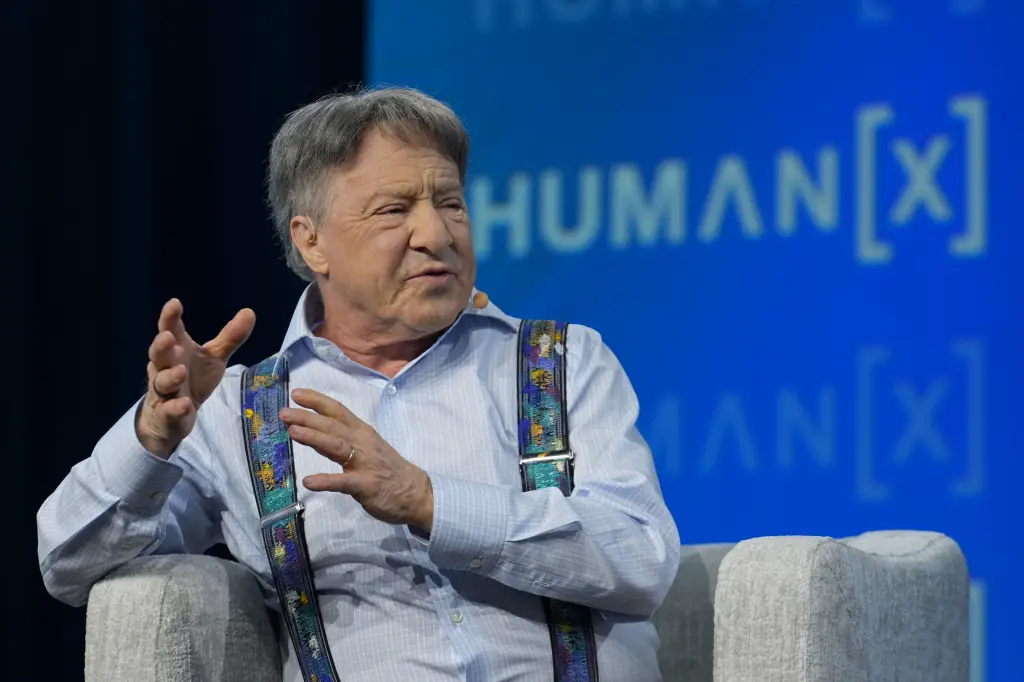
Gathered in Washington for the semiannual Yale CEO Caucus, a room of chief executives, policymakers, and scholars kept returning to a single idea. Artificial intelligence is real and it is cutting redundant layers out of organizations, but that has not made the job of an excellent manager any less valuable, any more than AI has reduced the value of an excellent teacher. In an event where the loudest voices in tech often describe managers as unnecessary bureaucracy in an age of always on agents, the executives in the room pushed back hard on that framing.
The example everyone kept bringing up
Corning CEO Wendell Weeks became the case study of the week after receiving the Yale Legend in Leadership Award. In conversations about what actually made him one of the most transformative leaders in Corning's 175 year history, the answer had nothing to do with technical mastery of the company's materials science. It came down to his ability to inspire excellence, loyalty, and respect in the people around him, the kind of leadership quality that shows up in how people describe working for someone, not in a resume line.
A rare point of agreement across the aisle
The event also gave out its first Yale Patriot Public Service Awards, honoring former Vice President Mike Pence for executive leadership and former House Speaker Nancy Pelosi for legislative leadership, two figures who rarely agree on much of anything politically. What united them, according to those speaking at the event, was not ideology but a shared commitment to the constitution, to public service, to integrity, and to something larger than themselves. The willingness of this crowd to applaud both of them for the same underlying trait says something about how durable that kind of leadership quality is seen to be, regardless of where someone sits politically.
Even the people building AI are nervous
The mood on AI itself was more anxious than triumphant. A flash poll of attendees found that 88 percent believed the sitting US president should raise AI safety directly with China's leader at their meeting the following week, and 74 percent thought he actually would. More strikingly, 93 percent of the executives polled disagreed with the idea that AI safety warnings are overblown, a level of consensus that is rare among a group whose companies are, in many cases, the ones deploying the technology in question.
What this means for leadership as a brand asset
For anyone thinking about how a company presents itself externally, there is a lesson underneath the leadership talk. As AI absorbs more of the work that once required a person, the traits it cannot replicate, the ability to earn trust, inspire loyalty, and rally people around a shared purpose, stop being a soft internal nicety and start becoming one of the harder to copy assets a company actually has left. A visible, trusted leader is not just good for morale inside the building. It is increasingly one of the clearer signals a brand can send from the outside in, at exactly the moment when so much else about how a company operates is starting to look the same as everyone else's.