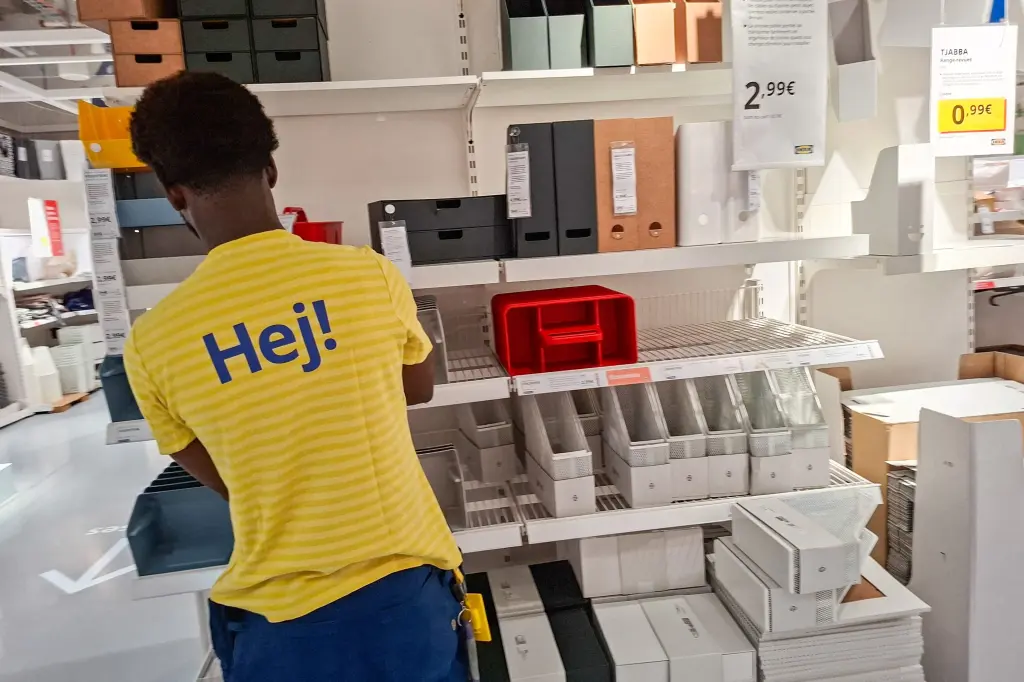
The prevailing corporate response to a squeezed middle class has been to chase the money that is left, tailoring products, pricing, and marketing toward the wealthier households still spending freely. Economist Katica Roy argues that IKEA has taken the opposite bet, building its brand around a single measure most retailers do not track closely, how many homes it can reach, rather than how much margin it can extract from the customers it already has.
The math behind a splitting economy
The numbers behind Roy's argument are stark. The top 20 percent of households now account for roughly 60 percent of consumer spending, while wages for everyone else have not kept pace with the cost of living. Wages grew 3.2 percent over the past year while consumer prices rose 3.4 percent, a negative 0.20 point wage to price spread. Measured against a pre pandemic baseline gap of 1.34 percentage points, that amounts to a 115 percent collapse in the margin households have to work with. One quieter signal shows up in how people are paying for basics, buy now pay later usage at grocery stores has doubled over the past two years, a sign that a meaningful number of households are now financing everyday groceries rather than discretionary purchases.
A KPI most retailers don't track
Against that backdrop, IKEA CEO Juvencio Maeztu has been explicit about what the company optimizes for. The big KPI, he has said, is in how many homes IKEA is present in, not top line revenue. He illustrates the philosophy with a simple example, the company sells umbrellas, and when times get harder, it normally reduces the price rather than raising it, the reverse of the instinct that guides most retailers trying to protect margin during a downturn.
Cutting prices while competitors raise them
That philosophy shows up directly in IKEA's numbers. The company leaned into deflationary pricing rather than passing costs on to shoppers, and even as revenue dipped 0.9 percent in fiscal 2025, store visits climbed to 736 million and operating income rose 16.8 percent to 1.46 billion euros. The result suggests that lower prices, paired with enough volume, can outperform a strategy built around defending margin on a shrinking base of high spending customers.
Building a supply chain that isn't hostage to the world
IKEA has also been investing to protect that pricing promise from forces outside its control, committing 70 million dollars to manufacturing in North Carolina specifically to reduce its exposure to global shipping disruptions. The logic follows directly from the brand's core commitment, a supply chain shock that forces prices up would break the exact promise the company has built its identity around.