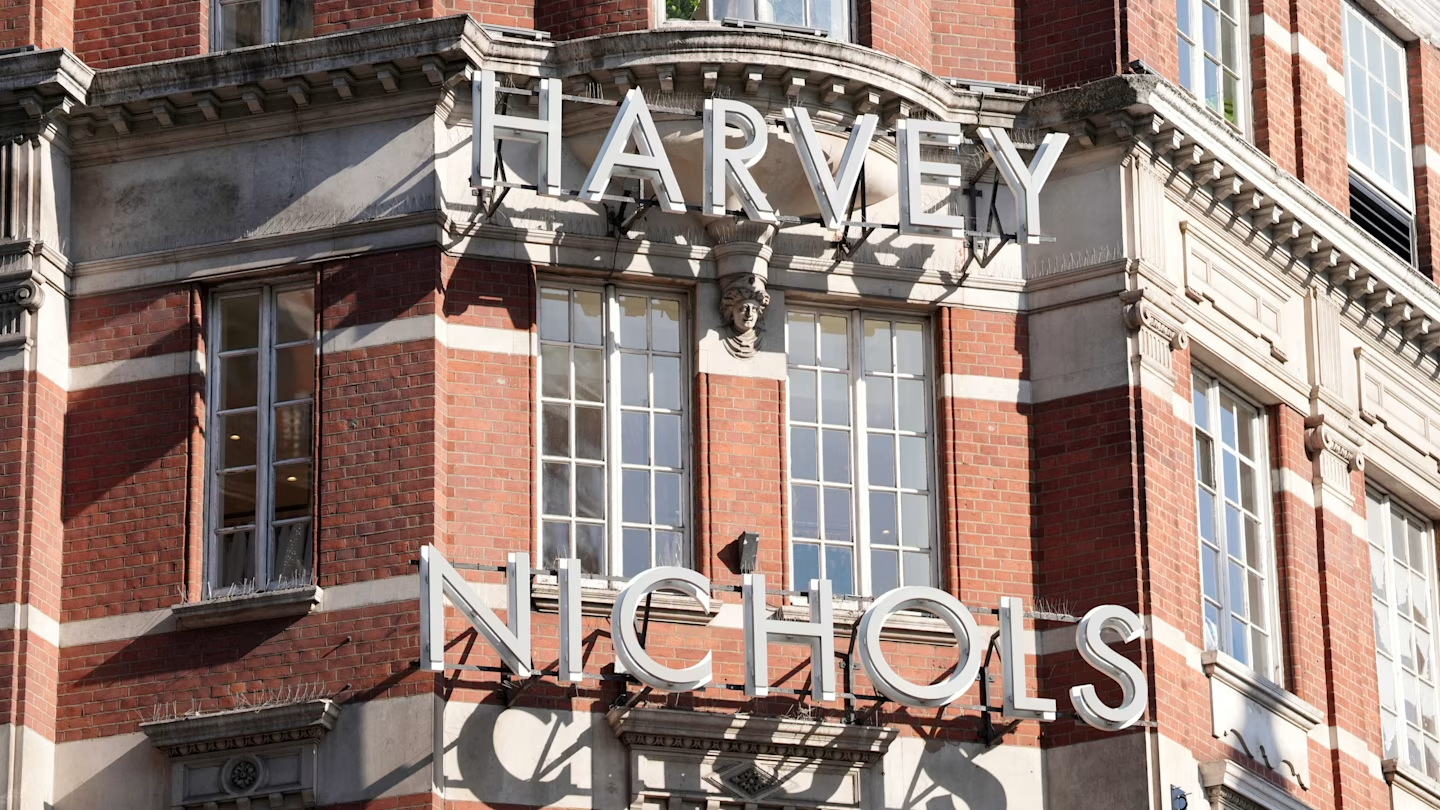
Harvey Nichols entered administration in August 2026 after three and a half decades under the ownership of Sir Dickson Poon, the Hong Kong billionaire who bought the retailer from the Burton Group in 1991 for 53 million pounds. Frasers Group, the retail empire built by Mike Ashley, stepped in with a pre pack deal worth 43 million pounds, taking over the UK operations. On paper it looks like a bargain. Industry consultants say the real cost of saving the brand runs several times higher than what Frasers actually paid for it.
How 35 years ended in administration
Poon spent decades propping up Harvey Nichols financially, most recently lending the business 32.5 million pounds in 2024 largely to pay down bank debt. Through his holding company Broad Gain UK, he became the retailer's single largest creditor, owed 104.6 million pounds that he is now unlikely to recover in any meaningful amount. The numbers behind the collapse are stark. The company's most recent annual results showed a 59 million pound loss on sales of 173 million pounds, a negative 35 percent margin, down sharply from 229 million pounds in sales the year before. Total unsecured creditor debt topped 240 million pounds, and those creditors are expected to recover somewhere between essentially nothing and 20 percent of what they are owed.
What Frasers actually bought
The 43 million pound pre pack deal, finalized on August 13, covers Harvey Nichols' UK operations, including seven stores, the Knightsbridge flagship along with locations in Manchester, Birmingham, Bristol, Leeds, Edinburgh, and Dublin, plus e commerce operations, existing inventory, and international franchise agreements. All 993 employees transferred with the sale.
The real bill comes after the purchase price
Retail consultant Jonathan De Mello estimates that genuinely revitalizing the Harvey Nichols brand could take roughly 200 million pounds spread over five years. A smaller figure floated earlier, around 60 million pounds, would only tide the business over for about two years unless sales start growing considerably right away. That gap between the modest purchase price and the much larger rebuild cost is the part of this story that matters more than the headline deal value.
Money was never the whole problem
Retail analyst Richard Hyman put the underlying issue plainly, saying the company's biggest problem was never a lack of money, it was a lack of sales and a lack of customers. Harvey Nichols competes directly with Harrods, which reported 1.48 billion dollars in turnover, and Selfridges, at 1.04 billion dollars in revenue, both of which carry many of the same luxury labels and, in Hyman's assessment, simply execute better.