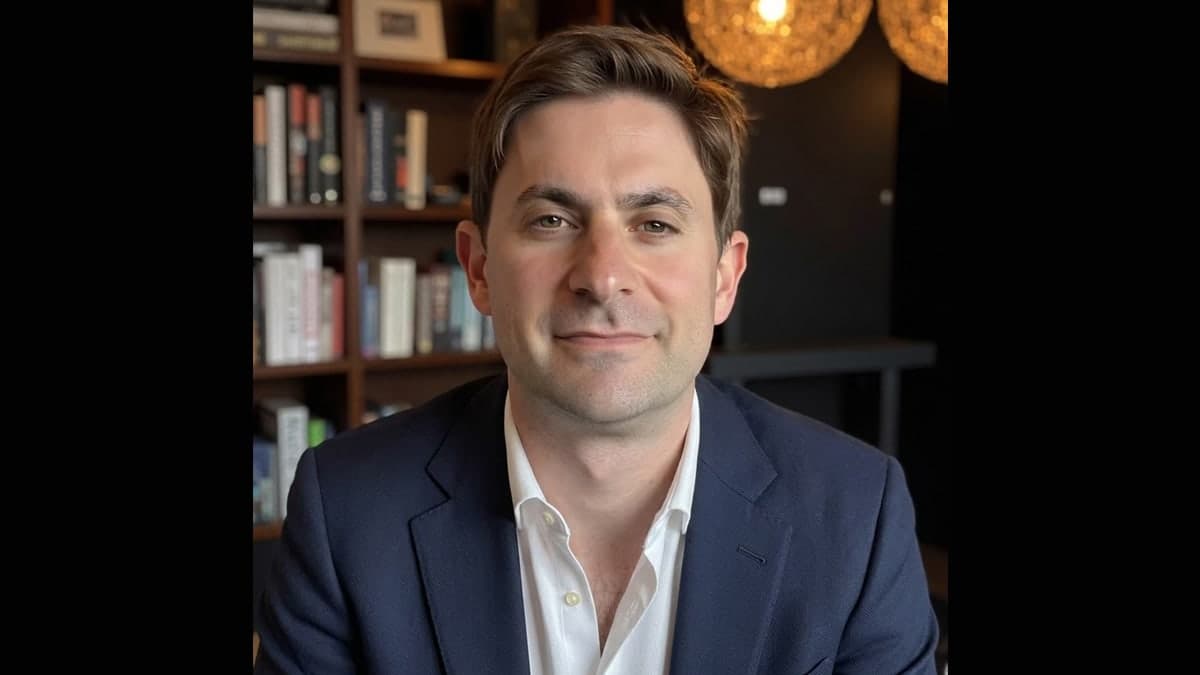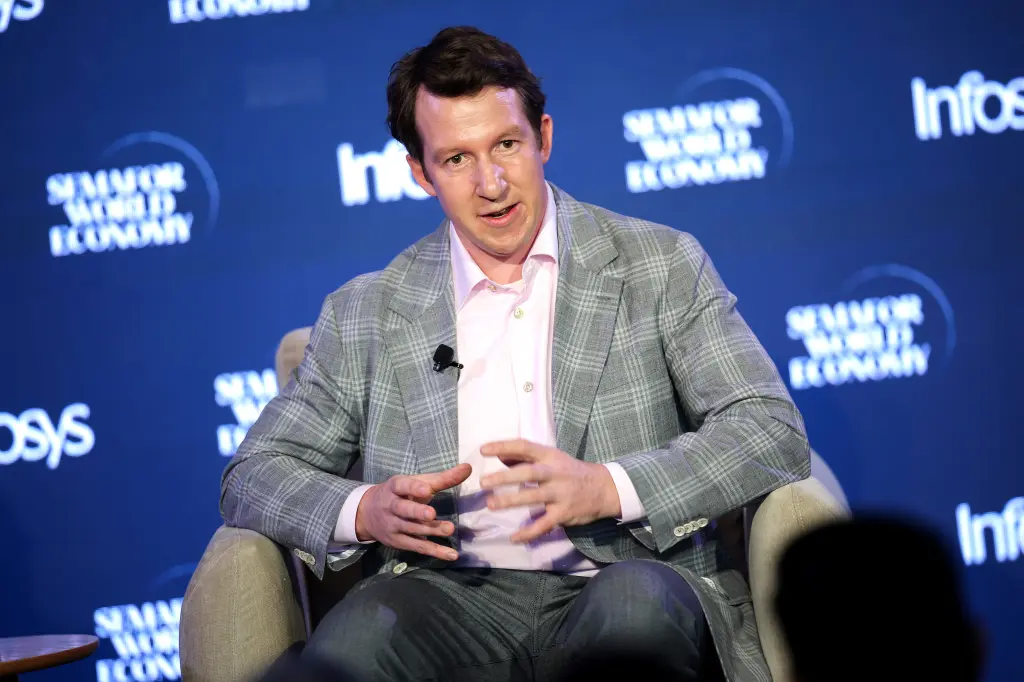
Jack Clark did not train as an engineer. He studied English literature and creative writing before working as a journalist, and he now cofounds one of the most influential companies building frontier AI. Speaking at a conference this year, Clark made the case that his humanities background, not a technical one, is what shaped his influence in the AI industry, an argument he has kept making even as the technology his company builds threatens to automate away entire categories of work.
The case Clark makes for his own degree
I'm a literature graduate, and I don't think you'd put that as a cofounder of a frontier AI company, Clark said, but what turned out to be useful is that I got to learn a lot about history and a lot about the kind of stories that we tell ourselves about the future. That background, he added, has turned out to be extremely relevant for AI in a way that I think people wouldn't have predicted.
What he actually thinks is worth learning
Clark is not arguing that young people should avoid technical skill altogether, but he is specifically skeptical of chasing basic or rote programming as a career bet. In his view, the degrees that matter more going forward are the ones built around synthesis across a whole variety of subjects and analytical thinking about that. The real skill, he said, is knowing the right questions to ask and having intuitions about what would be interesting if you collided different insights from many different disciplines.
Why this cuts against two decades of advice
Clark's comments run directly against the dominant career narrative of the last twenty years. Science and engineering graduate enrollment grew by more than a third between 2000 and 2015, driven largely by a boom in computer science, according to the National Center for Science and Engineering Statistics. Between 2013 and 2023, STEM job growth outpaced non-STEM job growth 26 percent to 9 percent. That is the backdrop his argument is pushing against, not a fringe complaint but a reversal of the exact logic that sent millions of students into computer science in the first place.
The cracks his own company found
The irony is that some of the clearest evidence for Clark's argument comes from inside Anthropic itself. Researchers Maxim Massenkoff and Peter McCrory found that AI can theoretically take over 94 percent of computer and math tasks, with programming jobs among the most exposed of any category. Anthropic CEO Dario Amodei drew wide attention for claiming AI could eliminate half of all entry level white collar jobs, a comment he later softened. Boris Cherny, the creator of Anthropic's Claude Code, went further still, saying coding is practically solved and predicting the title software engineer will start to disappear. The company most associated with automating code is, notably, the same one whose cofounder is now telling young people to study something other than code.
The numbers graduates are already living through
This is not a theoretical debate for the people it affects most. The unemployment rate for recent college graduates stood at 5.7 percent as of June, up from 3.6 percent before the pandemic, and higher than the overall unemployment rate of 4.1 percent. Some young people are responding by shifting toward the trades, with vocational community college enrollment up 16 percent in the past year. Others are stacking multiple part time jobs for flexibility or starting their own ventures rather than chasing a single traditional role.
Clark isn't alone in this read
Other voices in tech and academia are making a similar case. Microsoft chief scientist Jaime Teevan has argued that metacognitive skills, flexibility, adaptability, experimentation, and critical thinking, will matter more as other work gets delegated to AI, noting that developing real critical thinking skills requires friction and deep, difficult thought rather than shortcuts. Michael Oakes, an executive at Case Western Reserve University, framed the shift in economic terms, saying that as AI lowers the barrier to technical execution, the labor market premium is shifting toward a human layer of rigorous critical reasoning.
Philosophy's unlikely resurgence
One of the more surprising signs of this shift is who is getting hired. Alphabet's DeepMind AI lab has brought on several philosophers to work through the ethical questions its research keeps raising, and Clark confirmed that Anthropic has done the same. When was the last time you heard that a philosophy degree was like a great job prospect, Clark said. But it turns out that now it is.
What it means beyond AI labs
The skills Clark is describing, synthesis across disciplines, knowing which question to ask, storytelling grounded in real historical and cultural context, are the same skills that separate genuinely good editorial and brand work from generic, AI generated filler. As automation absorbs the mechanical parts of both writing and coding, the value that is harder to replicate shifts toward people who can think across subjects and tell a story that actually lands, which is exactly as true inside a newsroom or a brand content team as it is inside a frontier AI lab.