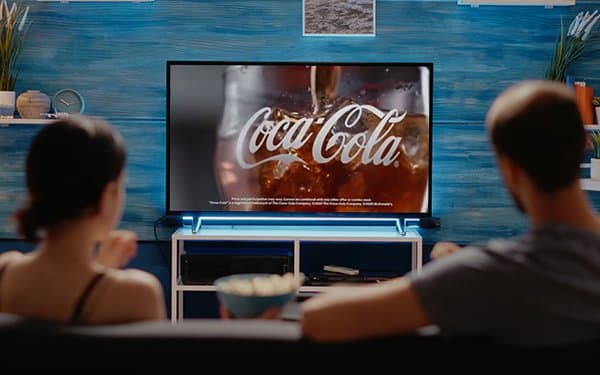
The streaming advertising business has always carried a quiet contradiction. Buyers pour tens of billions of dollars into connected TV every year, yet many of them cannot say with confidence what they are actually buying. An impression labeled as premium streaming might run on a living room screen with the sound up during a live event, or it might surface in a muted, skippable slot on a phone inside an app the buyer never intended to touch. Both have carried the same name, and for a long time they carried a similar price.
That is starting to change. A coordinated effort across the industry to define media quality in concrete terms is giving buyers something they have lacked for most of the connected TV era, which is a shared language for describing what an ad placement really is. If it takes hold, it could reshape how streaming inventory gets priced, how programmatic deals get structured, and how the next generation of automated buying tools learns to tell good inventory from filler.
The problem with calling everything premium
For most of the last decade, the pitch for connected TV leaned on a simple promise. It was television, but addressable, measurable, and available at the scale of the open web. That promise pulled budgets away from linear and into streaming at a remarkable pace, and projections now put digital video ad spending in the United States near eighty billion dollars for the year ahead. The trouble is that the word streaming grew to cover an enormous range of experiences, and the market never built a reliable way to distinguish them.
Ask a room of media buyers how confident they are in the quality of the connected TV inventory they purchase, and a striking share will admit their confidence is low. Survey work in the space has put that number well above four in ten. The gap between what a plan promises and what actually runs is not always fraud. More often it is ambiguity, where two very different placements share a label because no one agreed on a better one. One buyer put the frustration plainly, noting that things had been slipped into plans that they would never have considered streaming in the first place.
A taxonomy for what an impression really is
The fix now gaining momentum is not a new measurement gadget or a proprietary score. It is a classification system, a taxonomy that breaks a video impression down into the attributes that actually drive its value. Instead of a single vague grade, an impression gets described by the environment it appears in and the conditions under which it is seen.
The environment axis separates a large shared screen in the home from a personal handheld screen and from an ambient public display, because a brand message lands very differently in each. Layered on top of that are the viewing attributes that buyers have always cared about but rarely had encoded in a standard way. Was the sound on. Could the viewer skip the ad. Was the content live or a rerun. What targeting signals were available, and what kind of programming surrounded the spot. Each of these shifts the true worth of an impression, and pinning them down turns a fuzzy label into something a buyer can reason about and pay for accordingly.
The point researchers keep returning to is that the market has never systematically priced impressions according to their real economic value. A living room impression during a live broadcast with full sound is simply not the same asset as a muted, skippable mobile view, yet the pricing has often treated them as cousins. A shared taxonomy gives both sides of a deal a way to agree on which is which before money changes hands.
Why this matters more as machines start buying
There is a deadline pressure behind all of this, and it comes from automation. Programmatic buying already moves a large portion of connected TV budgets, and the next step is buying agents, software that plans and purchases with far less human oversight. An automated buyer is only as good as the definitions it is trained on. If the underlying data still treats premium living room video and throwaway mobile filler as interchangeable, an agent optimizing for cost will happily chase the cheapest impression that fits the label and call it a win.